ARBOTOM SONIC TOMOGRAPHY
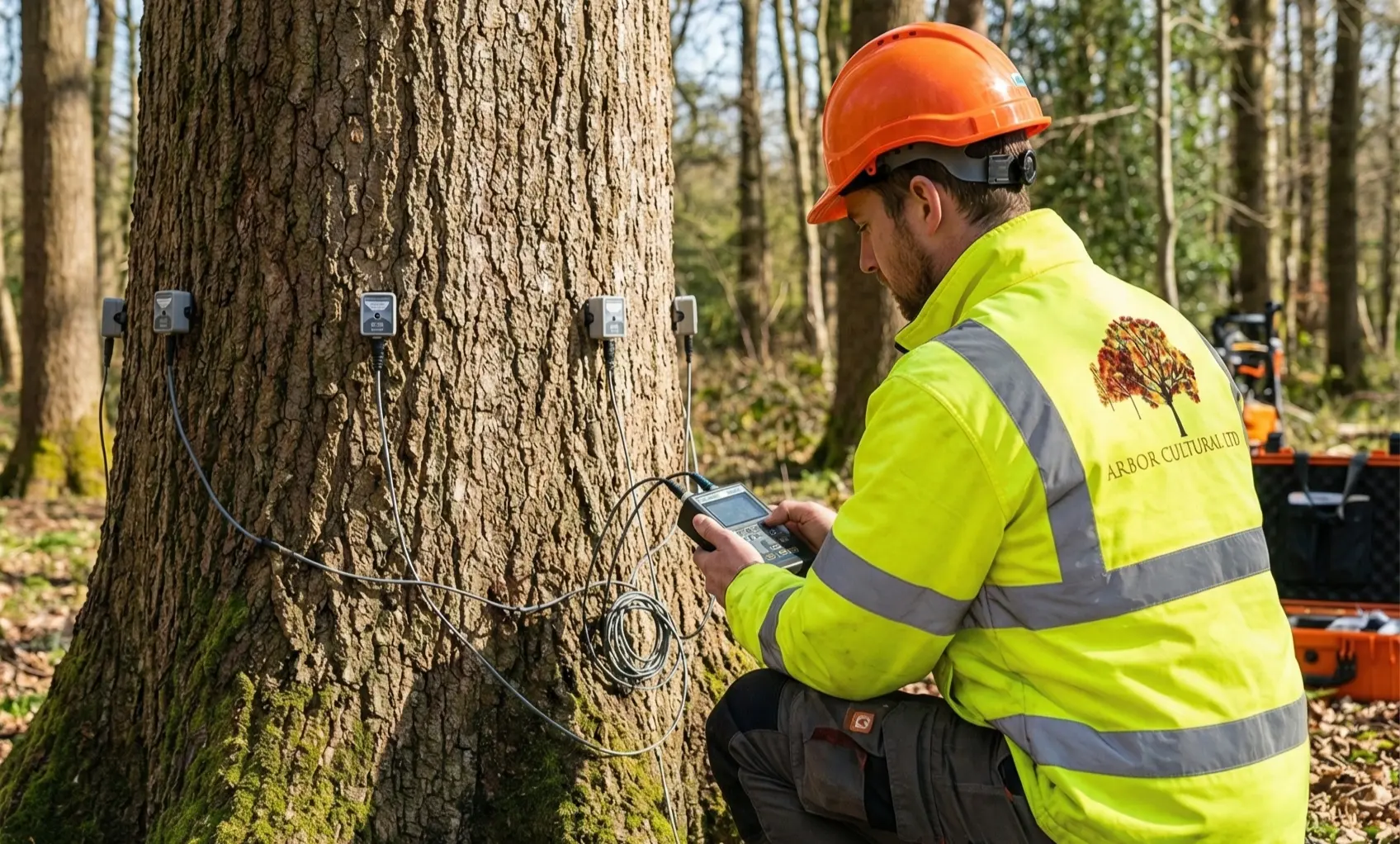
We undertake sonic tomography on trees—a highly advanced diagnostic process akin to a medical ultrasound. Sensors are placed strategically around the circumference of the tree to measure the time sound waves take to travel through the timber.
This collected acoustic data is simultaneously transmitted to our diagnostic computer, creating a coloured 2D or 3D image. The software meticulously maps zones of differing sound-transmission properties, clearly highlighting hollow spots, degradation, and internal decay without destructive impact.
Find Out More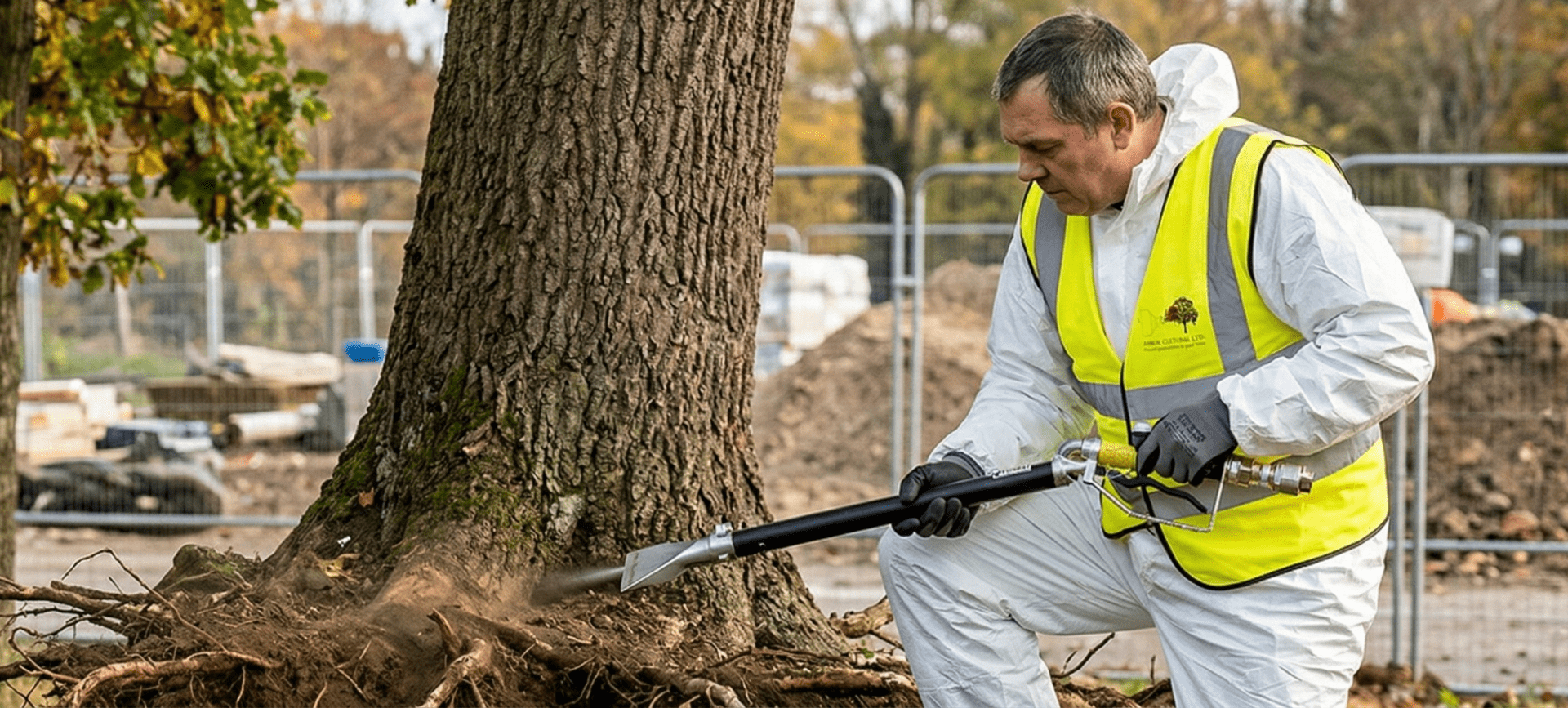
AIR SPADE SOLUTIONS
A tree’s ability to resist decay organisms depends entirely on its root system. In urban areas like London and Surrey, severely compacted soil often prevents roots from accessing the water and oxygen they desperately need to survive.
We utilize an Air Spade (Compressed Air Lance) to blast apart compacted soil without causing any damage to delicate fibrous roots. This technology allows us to safely inspect structural roots for decay without the destruction caused by mechanical digging.
Find Out More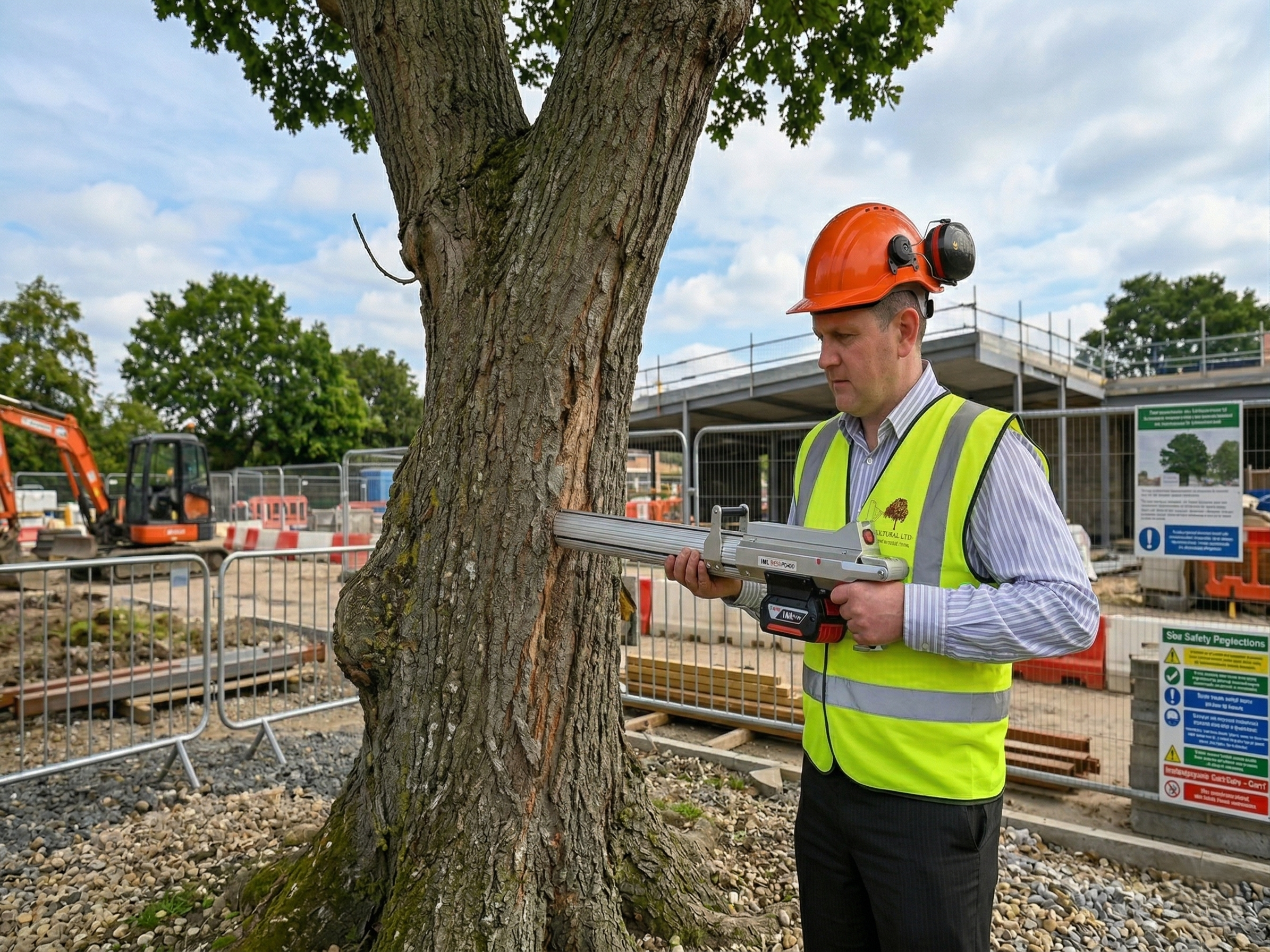
RESI-PD400 MICRO DRILLING
For detailed, physical confirmation, we utilize the brand new IML RESI-PD400 micro-drill. This specialist instrument, a form of Resistograph, measures both torsional resistance and the pushing force required to penetrate the tree stem.
Both readings are displayed on a digital readout and exported as detailed graphical images directly into your safety report, offering a level of precision that visual inspections simply cannot match. This allows us to definitively quantify strength loss in high-stakes risk assessments.
Find Out More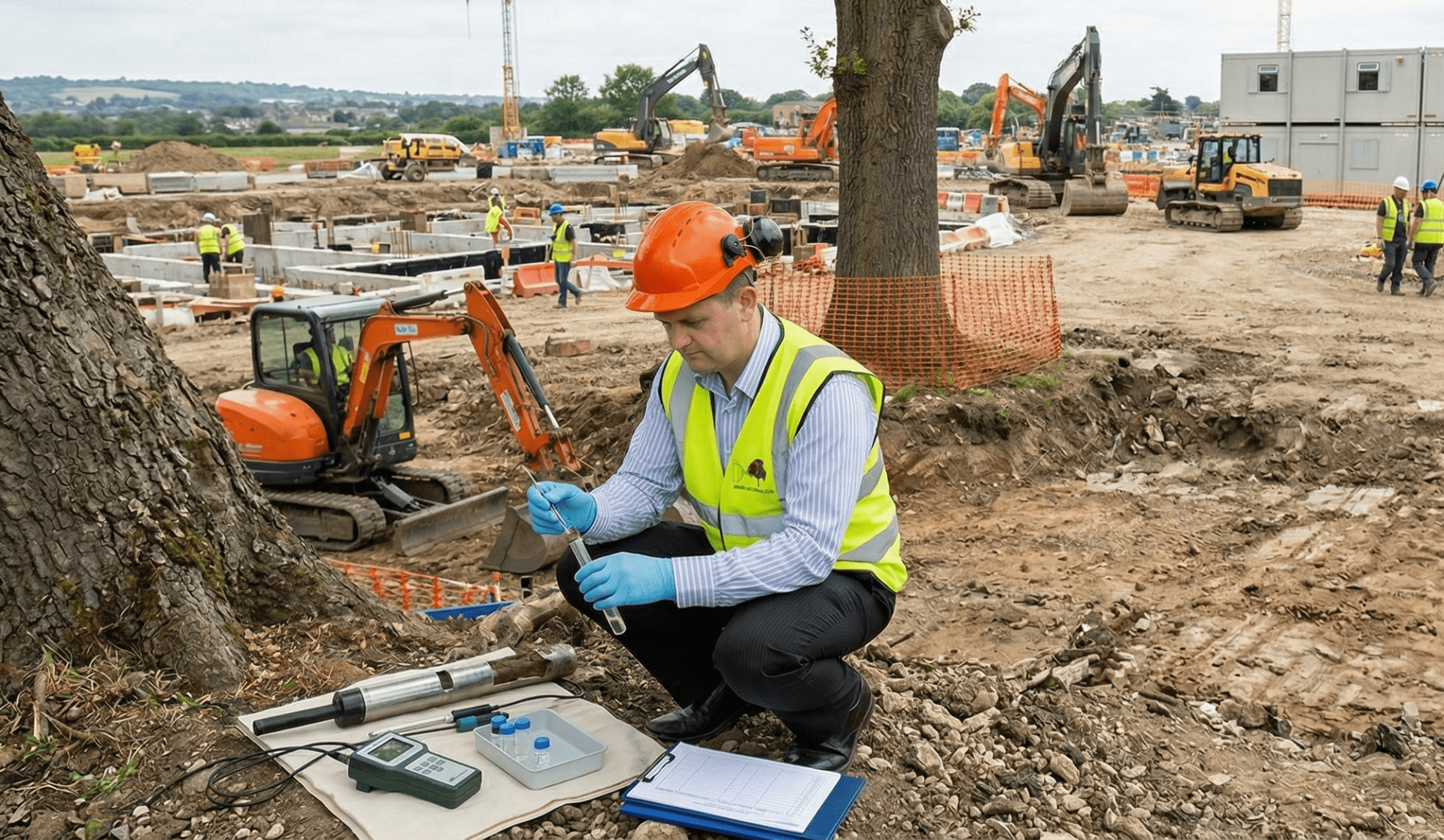
ARBOR CHECK VITALITY TESTING
Structural integrity is only part of the story. We utilize Arbor Check chlorophyll fluorescence testers to measure a tree’s physiological vitality and stress levels.
By understanding the tree's internal energy reserves, we can design management specifications—such as targeted minor weight reduction—that manage the safety risk effectively without triggering a spiral of decline that often follows heavy pruning or traditional "topping."
Find Out More